
H-beam, I-beam and X-beam describe the connecting-rod shank or cross-section design. They are not a universal strength ranking. A reliable connecting rod must be evaluated by material, geometry, heat treatment, rod bolts, inspection and the actual engine application.
In the performance connecting-rod market, customers often ask a very direct question: Should I choose H-beam, I-beam or X-beam? The question is useful, but it is incomplete. Beam shape changes how material is distributed through the rod body, but it does not replace the drawing, material condition, bolt specification or application review.
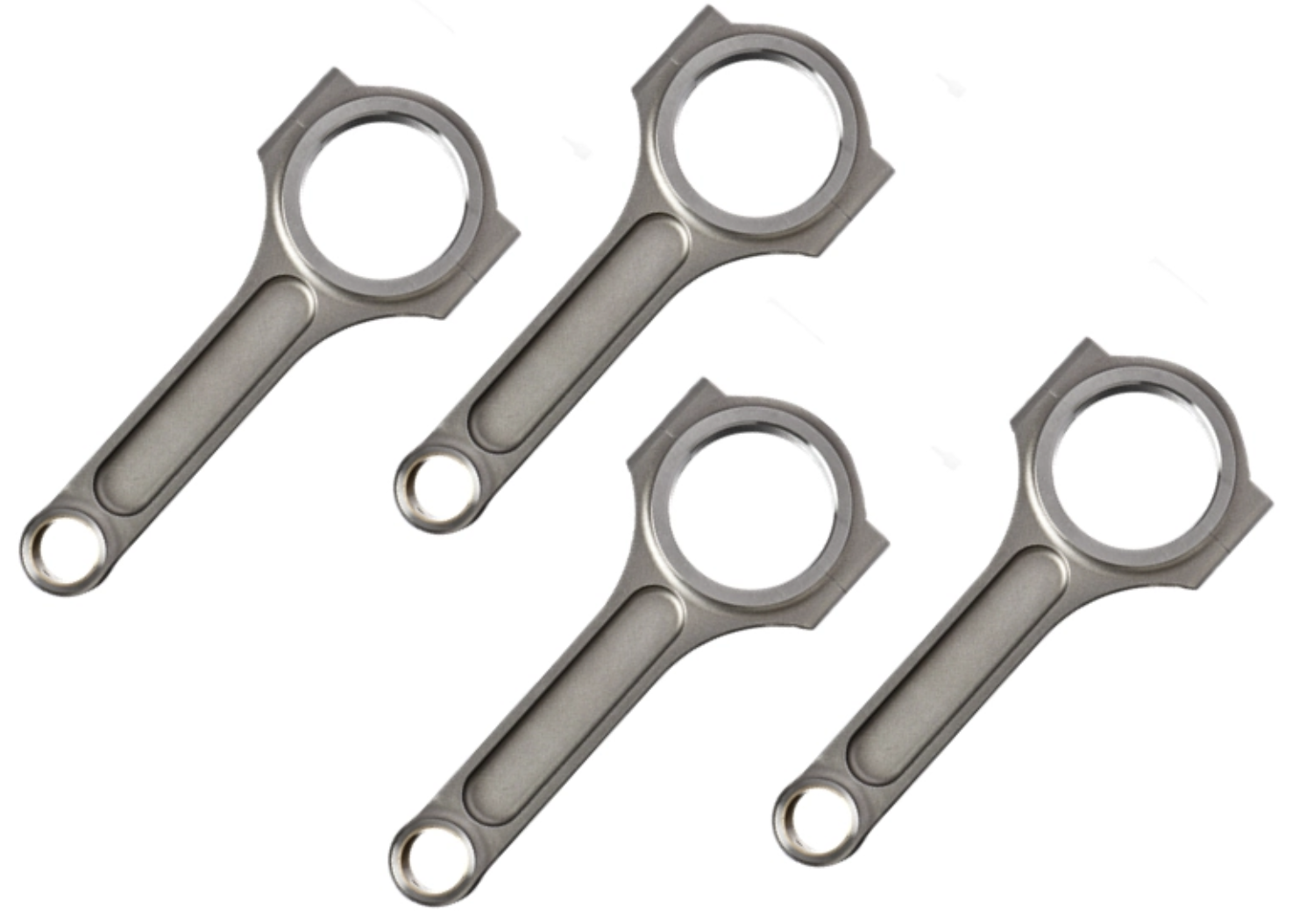
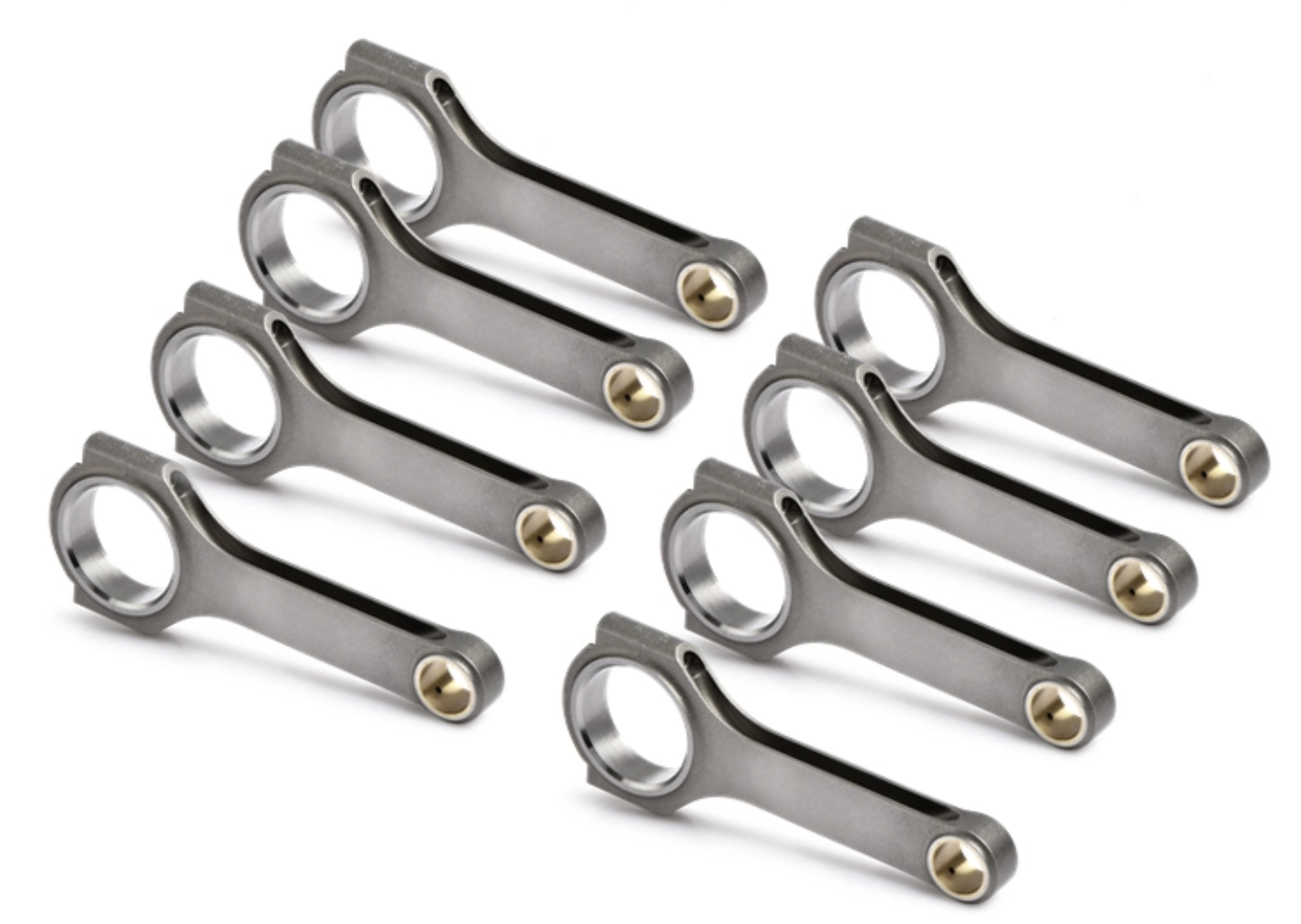
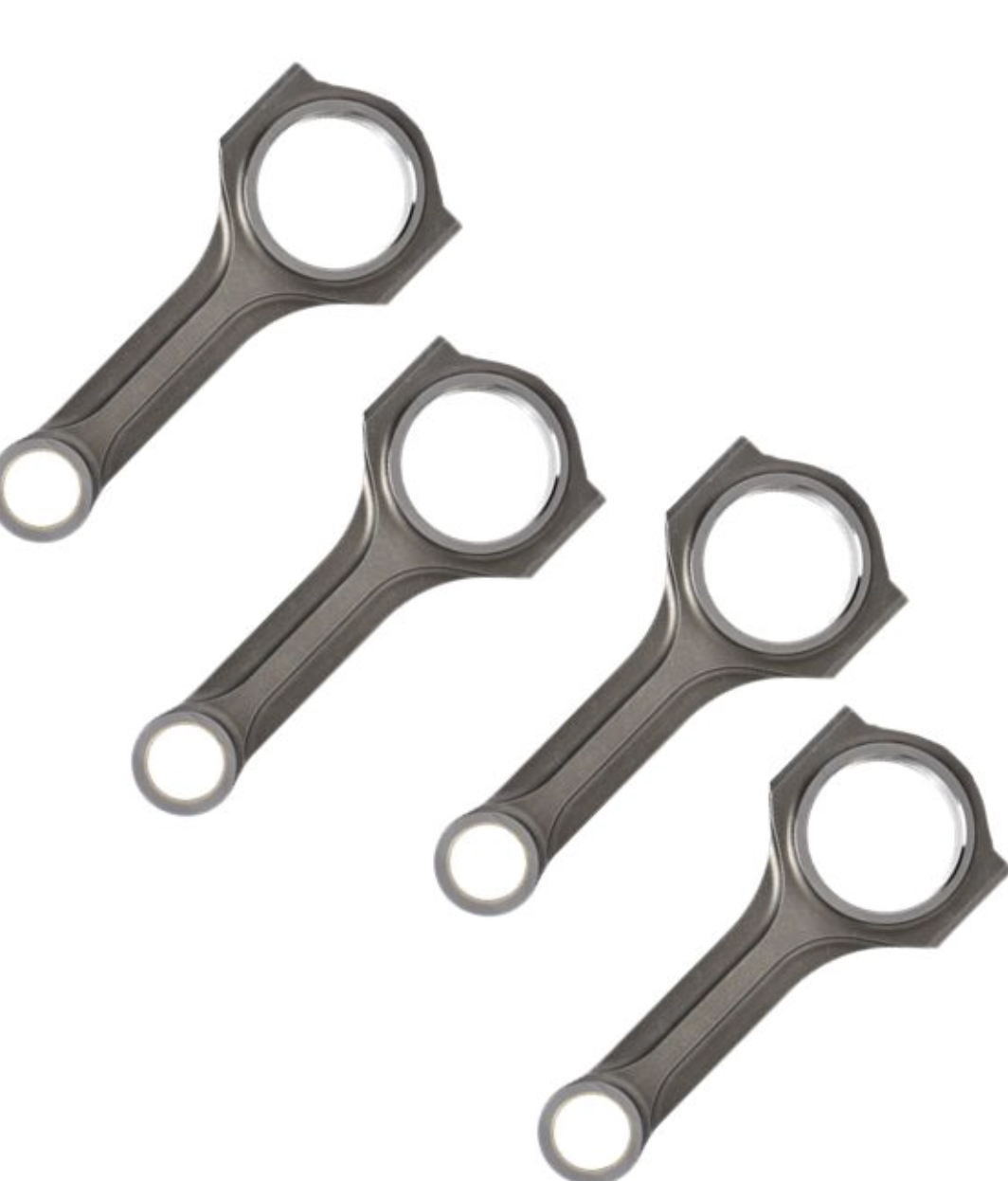
1. Beam shape is a design route, not a quality grade
H-beam and I-beam rods distribute material differently around the shank. That may affect weight, stiffness, buckling resistance, machining space and production cost. X-beam or hybrid sections may be used to balance material removal and stiffness in a specific design.
But two connecting rods with the same beam name can still be completely different products. The actual section size, fillet transitions, big-end stiffness, small-end design, material condition, heat treatment, surface treatment, rod bolts and inspection level all change the result.
2. Is H-beam stronger than I-beam?
Not automatically. H-beam and I-beam are both used in performance applications. One design may be chosen for packaging, weight, buckling behavior, cost, machining requirement or a specific engine layout. A beam label alone does not prove a horsepower limit.
The safer way to compare rods is to ask what the complete rod is designed to handle: target RPM, cylinder pressure, piston and pin weight, stroke, fuel, tuning strategy, duty cycle and expected service interval.
3. What public technical sources show
Established performance-component brands normally describe connecting rods by a combination of beam design, material, heat treatment, big-end structure, fasteners, dimensions and installation requirements.
For example, HKS lists an I-beam connecting rod for one 4B11 application while also giving material, heat treatment, big-end manufacturing method, bolt and lubrication details. Tomei describes H-beam design decisions in relation to weight, buckling strength, production cost and application. ARP and K1 materials also reinforce that rod bolt preload, lubricant, torque and stretch method are part of the connecting-rod system.
These public sources support the general engineering logic. They do not prove any JA-Modified product specification. JA-specific claims must be confirmed by JA drawings, material records, heat-treatment records, fastener specifications and inspection data.
4. Evaluate the complete connecting rod
| What to check | Why it matters |
|---|---|
| Material and material condition | The same material name can perform differently depending on grade, heat treatment and quality control. |
| Shank section and fillet transitions | Geometry affects stiffness, buckling behavior and stress concentration. |
| Big-end stiffness and bore stability | The bearing housing must stay stable under load. |
| Small-end design and wrist-pin interface | Pin fit, bushing, oil holes and lubrication all affect durability. |
| Rod bolts and installation method | Clamp load depends on bolt specification, lubrication, stretch or torque-angle procedure. |
| Inspection and weight matching | Dimensional control, weight matching and QC records reduce uncontrolled variation. |
| Engine application | Boost, RPM, fuel, duty cycle and service expectation define the real requirement. |
5. For B2B buyers: how to make the quotation faster and more accurate
For distributors, engine builders, workshops and procurement teams, beam shape is only one line in the specification. A useful inquiry should help both sides confirm fitment, production route, inspection level, packaging and delivery expectation before cost and lead time are discussed.
| Buyer-side information | How it helps the project |
|---|---|
| Engine application and reference part | Engine code, sample, drawing or OEM reference helps confirm center-to-center length, big-end bore, small-end bore, width and packaging space. |
| Target use | Street, drag, circuit, endurance, high-boost, diesel, motorcycle or special-use projects may need different material, beam style and safety margin. |
| Performance target | Target power, maximum RPM, boost, fuel and piston / pin information help avoid choosing a rod by beam label alone. |
| Specification preference | If the buyer already has a preference for 4340, 300M, Ti-6Al-4V Grade 5, H-beam, I-beam, X-beam, oil hole, bushing or bolt route, it should be stated early. |
| Inspection documents | Material certificate, hardness record, dimensional report, weight matching, MPI or other documents can be discussed before order confirmation. |
| Order plan | Trial order, batch order, expected quantity, target market and delivery target affect MOQ, lead time, production route and packaging plan. |
| Branding and packaging | Neutral packaging, JA-Modified packaging or customer branding should be confirmed before production and shipment. |
The more complete the inquiry is, the faster JA-Modified can reply with a realistic material / beam-style recommendation, MOQ direction, lead-time expectation and inspection-document scope. This reduces repeated confirmation and lowers the risk of producing a rod that does not match the engine package.
FAQ
Is H-beam always stronger than I-beam?
No. H-beam and I-beam are section design routes. Actual strength depends on material, section dimensions, transitions, heat treatment, fasteners, manufacturing quality and load direction.
Is I-beam only for OEM or low-power engines?
No. I-beam designs are used in both production and performance applications. The final suitability depends on the complete rod design, not the name alone.
Is X-beam automatically better?
No. X-beam or hybrid sections may be useful in a specific design, but the label alone does not prove higher strength or reliability.
Can beam shape determine horsepower capacity?
No. A universal horsepower or RPM limit requires a specific rod design, engine application, fastener system, installation condition and supporting validation data.
Technical reference basis
- HKS 4B11 connecting rod product information: HKS product page.
- Tomei forged H-beam connecting rod technical page: Tomei technical page.
- ARP fastener installation overview: ARP installation overview.
- K1 Technologies rod fastener installation guide: K1 installation guide.
Related JA-Modified guides
- Forged Connecting Rod Selection: Why Material and Beam Style Are Not Enough
- Connecting Rod Materials: 4340, 300M, Ti-6Al-4V Grade 5 or Aluminum?
- Connecting Rod Oil Passages: Pre-Assembly Inspection Guide
| Product focus | Forged connecting rods, forged pistons, piston pins, DCT clutch systems and custom engine internal components. |
| Connecting rod materials | Forged 4340 steel, forged 300M steel, Ti-6Al-4V Grade 5 titanium and project-based material options. |
| Project support | Drawing / sample review, material and beam-style discussion, MOQ direction, lead-time expectation, inspection-document scope and packaging plan. |
| Website | www.forgedpiston.biz |
| avon@forgedpiston.biz |
Technical information is provided for selection discussion. Final material grade, product form, heat-treatment condition, dimensions, fasteners, MOQ, lead time and application suitability must be confirmed against the project specification before production or installation.