When customers compare forged connecting rods, the first questions are usually simple: Is it 4340 or 300M? Is it H-beam, I-beam or X-beam? What horsepower can it handle?
Those questions matter, but they are not enough. A forged rod should not be judged by material grade alone, and it should not be judged only by beam shape. Connecting rod reliability is a complete-system question: material, beam design, heat treatment, rod bolts, machining precision, weight matching, inspection data and the actual engine application all work together.
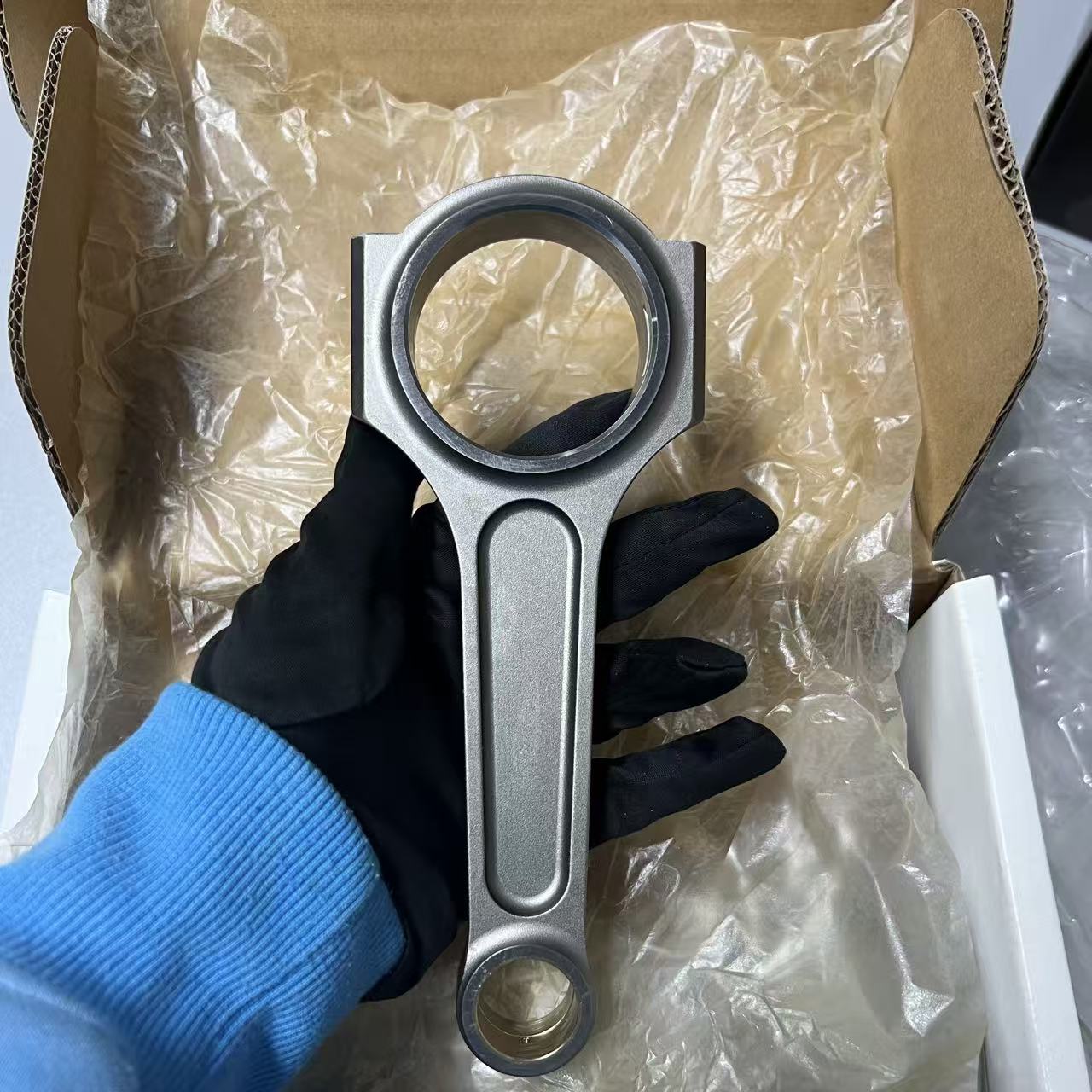
This article explains how JA-Modified evaluates forged rod selection. It does not publish a universal horsepower or RPM limit. Final suitability depends on the exact engine, rod design, bolt specification, dimensions, heat treatment, inspection result and application conditions.
1. 4340 and 300M: Material Route, Not a Complete Answer
4340 alloy steel is widely used in performance connecting rods because it offers a useful combination of strength, toughness, ductility and hardenability. 300M is commonly described as a modified 4340 route with higher strength potential and good toughness when processed correctly.
However, the material grade alone does not define a finished rod. A poorly designed or poorly heat-treated “higher-grade” material can still be a weak product. A well-designed 4340 rod with proper heat treatment, accurate machining, good bolts and complete inspection may be the correct answer for many street and race builds.
| Material question | Public-safe answer | What not to claim |
|---|---|---|
| Is 300M stronger than 4340? | 300M is a higher-strength modified 4340 route, but final rod performance depends on design and validation. | Do not say 300M is always better for every engine. |
| Is 4340 enough? | 4340 is commonly used for high-performance rods when the design, heat treatment and bolts are matched to the application. | Do not give one universal HP limit without a specific rod and test basis. |
2. H-beam, I-beam and X-beam: Shape Is Only One Part of the Design
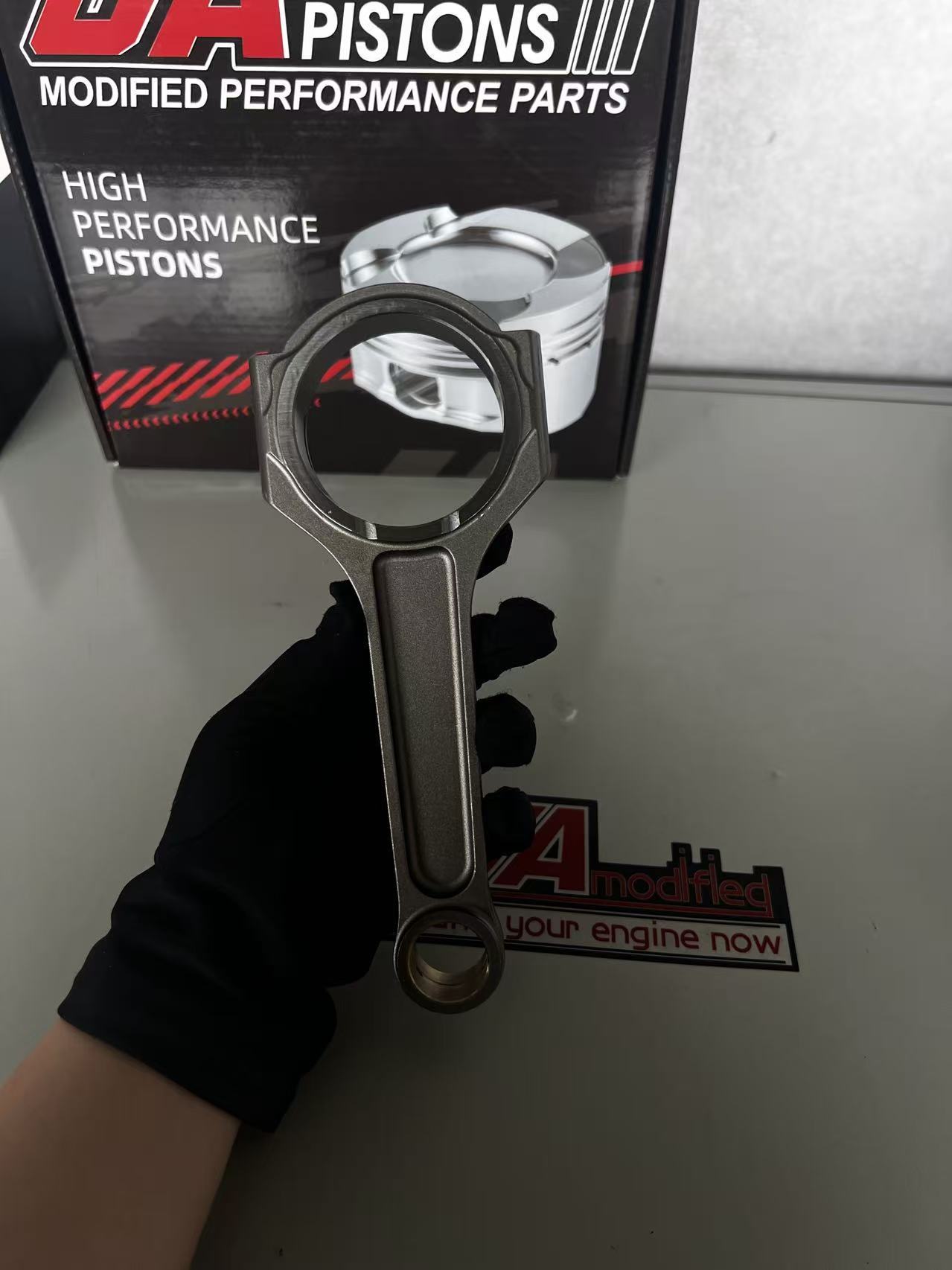
Beam style changes the cross-section, stiffness, weight, clearance envelope and stress path of the rod. But the beam name alone does not prove which rod is stronger. The actual cross-section, material, forging, heat treatment, machining accuracy, bolt size and application decide the real design limit.
This is why JA-Modified avoids saying “H-beam is always stronger” or “I-beam is always better.” Different engine builds may need different compromises: peak cylinder pressure, high RPM, packaging space, piston weight, rod ratio, stroke and intended use all matter.
3. Rod Bolts Are Part of the Rod System
In many high-performance rod failures, the discussion quickly returns to bolt preload, lubricant, torque procedure, bolt stretch, thread condition and repeated use. A strong rod body does not compensate for incorrect bolt installation.
Professional rod bolt suppliers such as ARP publish bolt data by material, size, lubricant and target stretch/torque. This supports an important principle: torque is not just a number; it is an indirect way to create clamp load.
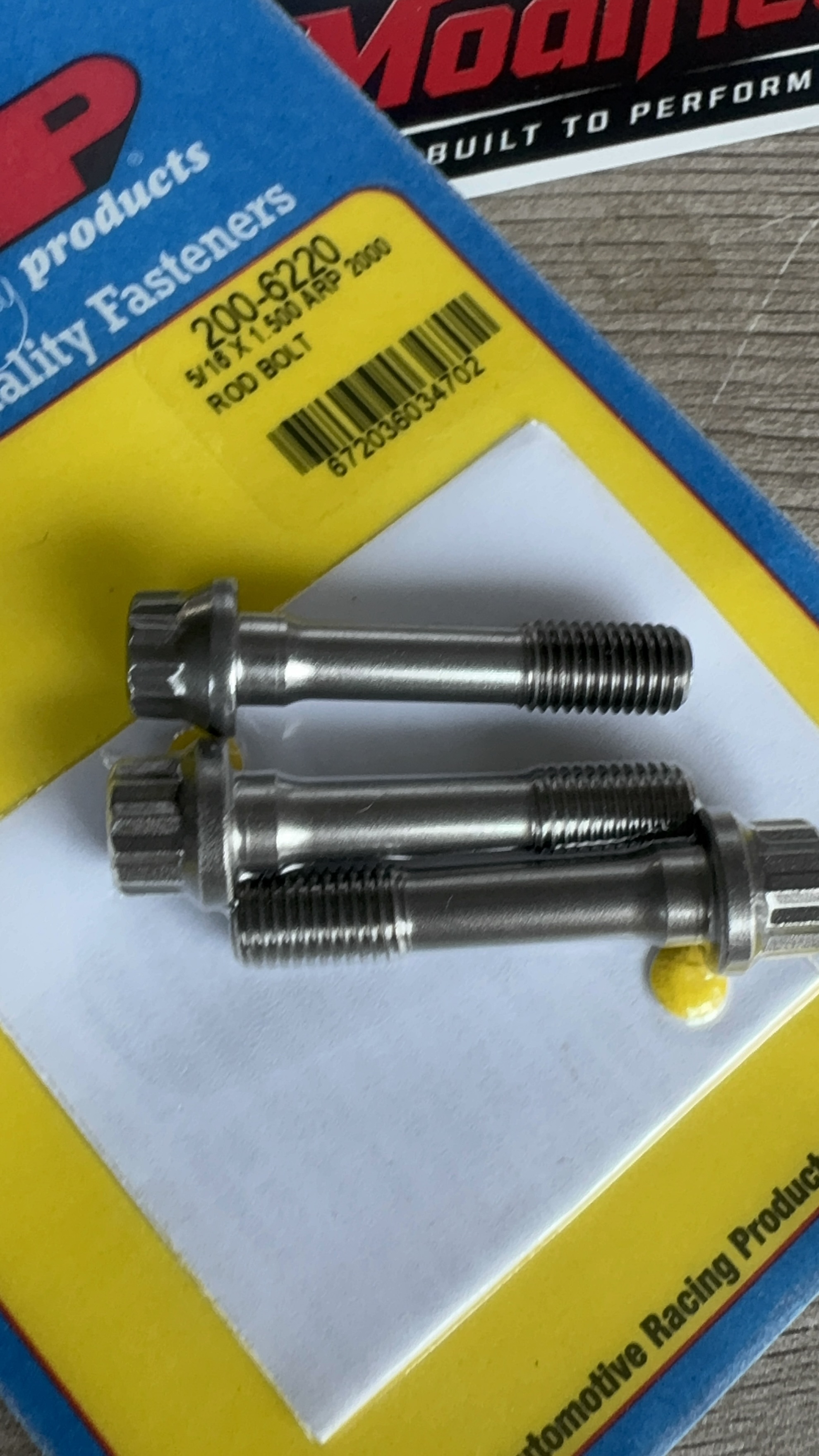
If the rod uses ARP or another branded bolt, follow the bolt manufacturer’s instruction for that exact part number. For racing or critical applications, bolt stretch measurement is preferred where possible.
4. What We Ask Before Recommending a Rod
Before recommending 4340, 300M, titanium, H-beam, I-beam or X-beam, JA-Modified first asks what the engine is expected to do. A connecting rod for a street build, a drag build, a high-boost turbo build and a long-duration endurance build may not be evaluated in the same way.
| Information | Why it matters |
|---|---|
| Engine model and displacement | Defines rod length, pin size, crank geometry and packaging. |
| Target power and boost | Changes cylinder pressure and tensile/compressive load. |
| Maximum RPM | Increases inertia load and fatigue demand. |
| Stroke and piston weight | Directly affects reciprocating mass and rod load. |
| Fuel, tuning and usage | Street, drag, circuit and endurance builds need different margins. |
| Bolt option and installation method | Clamp load depends on bolt material, lubricant, torque and stretch. |
5. What Should Be Checked Before Delivery
For a forged rod project, the correct review is not only “what material is it?” A responsible review should include material, heat treatment, dimensions, weight and inspection.
| Check item | Why it matters | Public-safe wording |
|---|---|---|
| Material certificate | Confirms the material route used for the part. | Ask for material proof when required. |
| Heat treatment / hardness | Controls strength, toughness and fatigue behavior. | Confirm by report, not by material name alone. |
| Big-end and small-end bore | Affects bearing fit, pin fit and assembly reliability. | Check against drawing and installation requirement. |
| Center-to-center length | Affects compression height and engine geometry. | Must match engine and piston package. |
| Weight matching | Important for balance and high-RPM smoothness. | Confirm the tolerance per set. |
| Rod bolt specification | Defines clamp load and installation procedure. | Confirm bolt material, lubricant, torque and stretch. |
| NDT / inspection | Helps identify surface or internal defects depending on method. | Do not claim 100% inspection unless the report supports it. |
A reliable forged rod is not defined by 4340, 300M or beam style alone. The reliable answer is application matching: material + beam design + heat treatment + bolts + inspection + engine conditions.
Technical Reference Basis
- Carpenter Technology 300M alloy information: 300M alloy finder.
- Carpenter Technology 4340 alloy information: 4340 alloy finder.
- Manley Performance connecting rod product information: connecting rods PDF.
- K1 Technologies connecting rod product information: connecting rods.
- ZRP connecting rod installation instructions: installation instructions.
- ARP rod bolt information: ARP official site.
Conclusion
When selecting forged connecting rods, the better question is not “Which material is strongest?” or “Which beam is strongest?” The better question is: which complete rod system is matched to this engine build?
At JA-Modified, we prefer to evaluate rods with application data, material route, beam design, bolt specification, heat treatment, machining precision and inspection records together. Not matched, not delivered.
Send us the engine model, target power, RPM range, boost level, piston weight, stroke, fuel and intended use. JA-Modified will help review which material, beam design and bolt configuration should be considered before production.