
When comparing a titanium connecting rod with a 4340 steel connecting rod, one visible difference often attracts attention: the bolt-hole area.
Some steel rods use a clear counterbore to accommodate the bolt head. Some titanium rods appear more conservative around the same area. This often leads to a simple question:
Does titanium mean a connecting rod cannot use a counterbore?
The answer is not that simple.
Titanium connecting rods are not universally forbidden from using counterbores. The real point is that a titanium rod should not simply copy the counterbore geometry of a steel rod. Hole geometry, remaining wall thickness, transition radius, bolt preload and contact conditions all need to be designed and validated as a system.
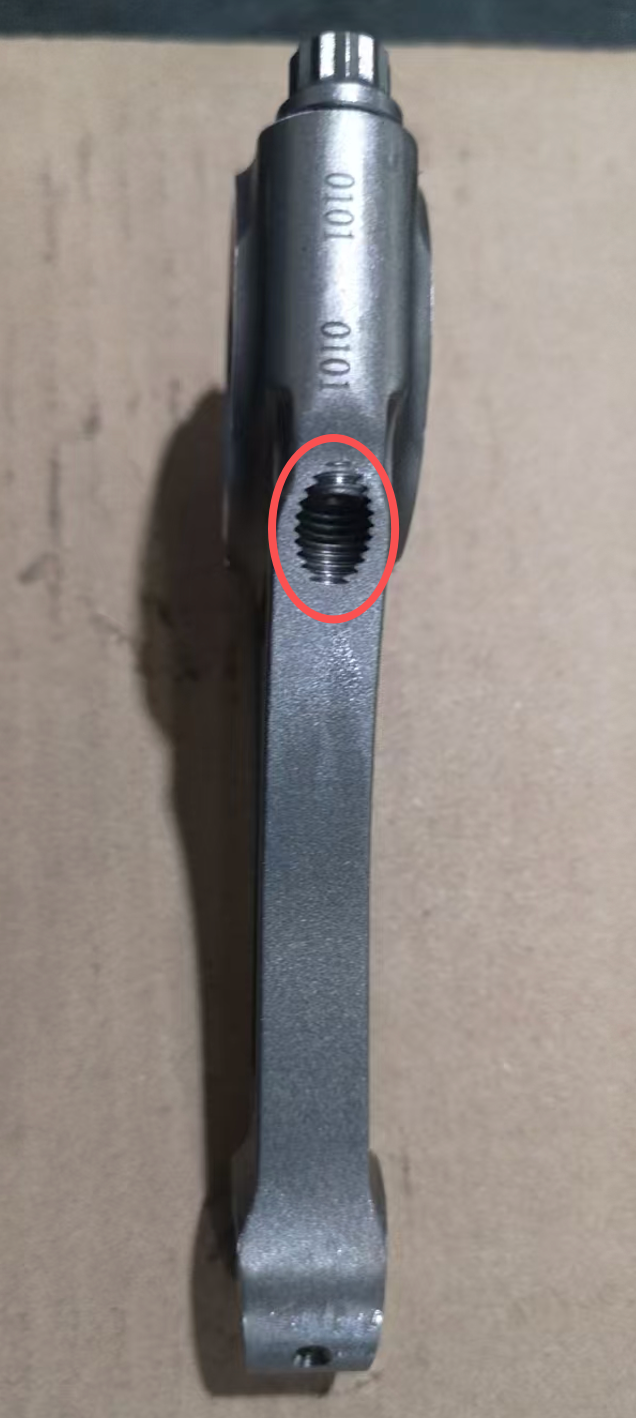
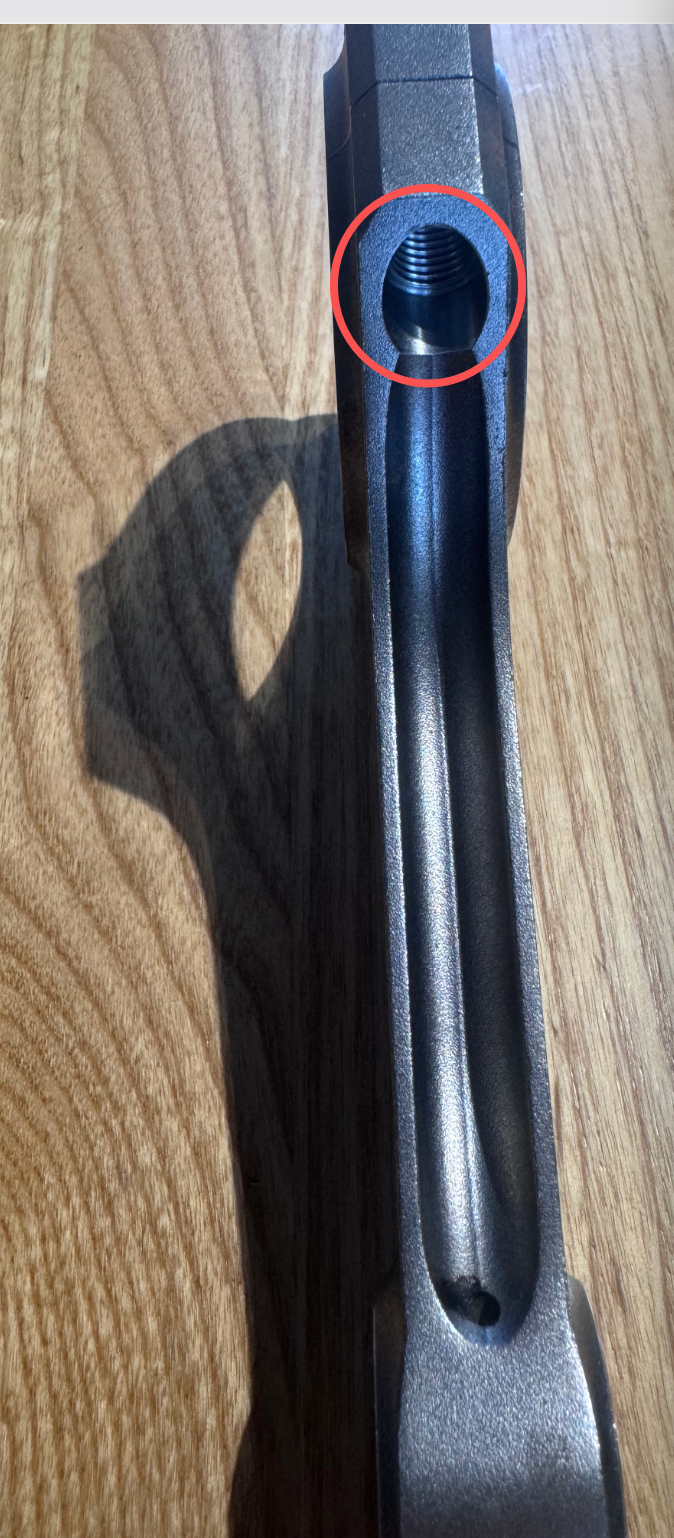
1. What These Photos Can and Cannot Prove
The photos can show that two sample rods use different bolt-hole structures. They do not prove which one is stronger, which one has longer fatigue life, or whether either design has passed a specific validation program.
| Can Be Stated | Should Not Be Claimed From Photos Alone |
|---|---|
| The two samples have visibly different bolt-hole geometry. | All titanium rods must avoid counterbores. |
| The 4340 sample uses a more visible bolt-head recess. | A counterbore automatically causes failure. |
| Titanium rod bolt-hole design needs separate verification. | The current titanium structure has already passed fatigue testing. |
| Material substitution should not be judged by appearance alone. | Titanium is always stronger or weaker than 4340 in the final rod. |
2. Why Counterbore Geometry Matters
A connecting rod works under repeated tensile, compressive, bending and inertia loads. The big-end bore, small-end bore, shank transition and bolt area are all sensitive regions.
A counterbore changes the local section. If counterbore depth, bottom radius, edge distance, remaining wall thickness or bolt-head contact area are not controlled properly, the stress distribution can become less favorable.
So the real engineering question is not simply whether a counterbore exists. The questions are:
- How large is the bottom radius of the counterbore?
- How much wall thickness remains after machining?
- Is the bolt-head or washer contact area large enough?
- How is bolt preload transferred into the rod body?
- Does the big-end bore remain round after tightening?
- Has the design been validated through fatigue, bench testing or field history?
For connecting rods, material strength alone is not enough. A stronger alloy cannot compensate for poor geometry, poor surface finish, incorrect bolt preload or unverified contact conditions.
3. Titanium Needs Special Attention at Contact Interfaces
For titanium alloys such as Ti-6Al-4V, the design focus is not only the material name. Under high contact pressure, repeated load and small relative motion, titanium parts require careful control of contact wear, fretting and galling risk.
That means the following areas deserve attention:
- Contact between bolt head, washer and rod body;
- Thread engagement and bolt preload consistency;
- Small-end bushing press fit and post-press bore size;
- Clearance between bushing and piston pin at operating temperature;
- Big-end bearing contact with the crankshaft journal;
- Surface treatment, lubrication and post-disassembly inspection.
This is why a titanium connecting rod should not be described only as an “advanced material” part. Reliability usually comes from many small details being controlled together.
4. What We Check Before Recommending a Titanium Rod Design
JA-Modified Verification Checklist
- Material evidence: grade, batch number, chemical composition, mechanical properties and material condition.
- Hole geometry: counterbore type, depth, radius, edge treatment and remaining wall thickness.
- Bolt system: bolt specification, strength grade, thread engagement, washer or bearing surface design.
- Assembly control: torque, preload, lubrication and anti-galling requirement.
- Bushing fit: bushing material, interference fit, finish machining, piston pin clearance and oil-hole alignment.
- Machining quality: bore accuracy, surface roughness, deburring, edge conditioning and inspection report.
- Validation record: fatigue test, bench test, installation feedback or comparable field history.
5. The Safe Conclusion
Titanium connecting rod counterbore design is not a yes-or-no question. It is a system-level design question.
The safer conclusion is:
Do not copy the counterbore geometry of a 4340 steel rod directly onto a titanium rod. Validate the bolt-hole structure, contact surface, preload control, bushing fit, machining quality and fatigue behavior together.
Only when these pieces of evidence are available can a titanium connecting rod design be judged with confidence.
References
- A repertoire of failures in connecting rods for internal combustion engines.
- NASA technical material on fretting and wear behavior of Ti-6Al-4V.
- Research on machining-induced residual stress and fatigue properties of Ti-6Al-4V.