1. Background
This JA-Modified case study documents a critical engineering lesson. A performance engine builder developed a bushing/bearing assembly for a high-performance application. The initial prototype (Standard Design) completed over 20,000 km with uniform, stable wear considered a successful result. JA-Modified's quality team documented the full investigation.
For production, a modified design (Test Design) was introduced with an oil hole feature intended to improve lubrication. The production components were manufactured according to the new specification.
2. Test Results Comparison
JA-Modified's engineering team conducted a detailed comparison between the prototype and production components to quantify the performance difference.
| Parameter | Standard Design (Prototype) | Test Design (Production) | Assessment |
|---|---|---|---|
| Service Life | ~20,000 km | ~1,000 km | 20x difference |
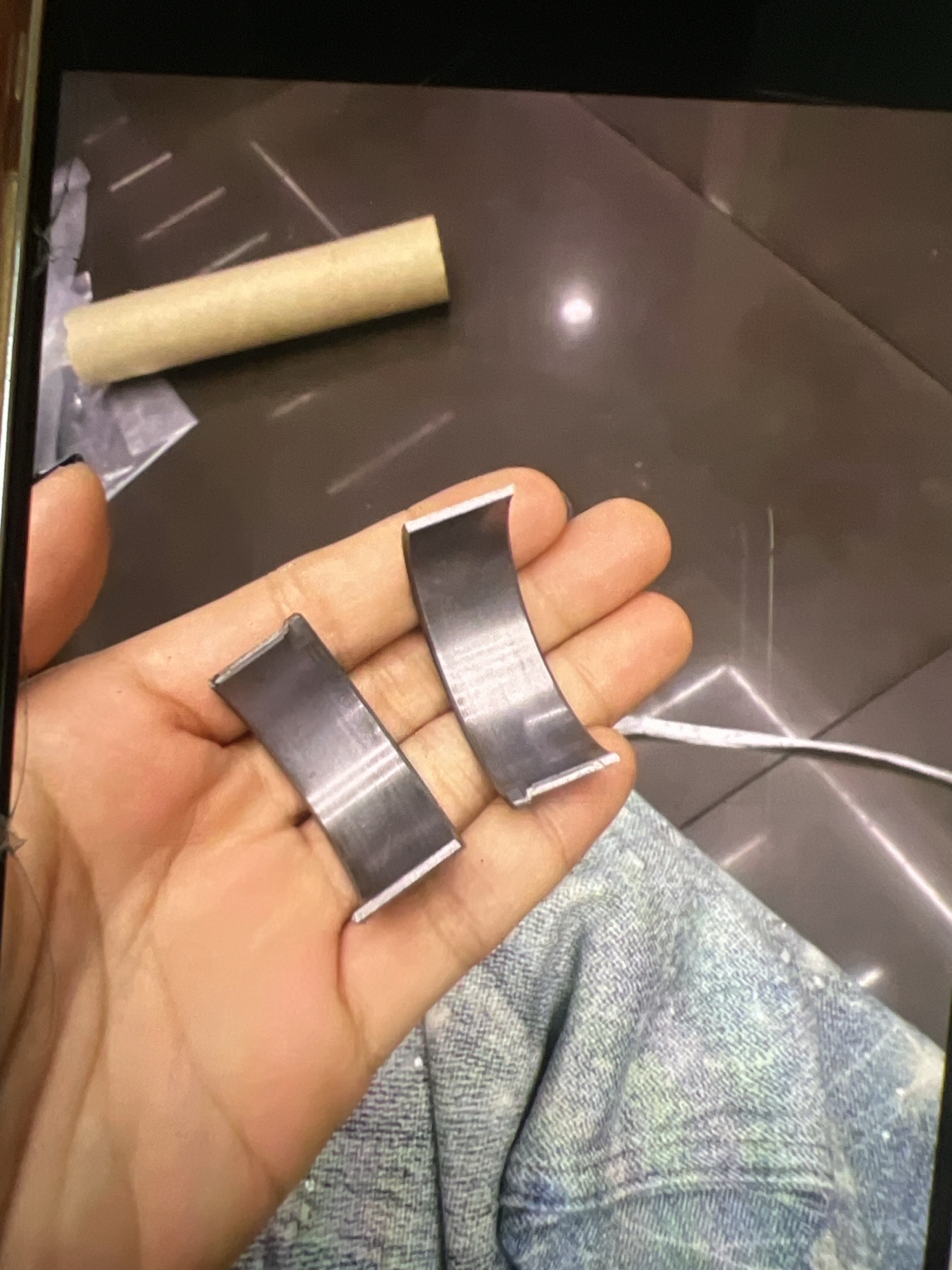
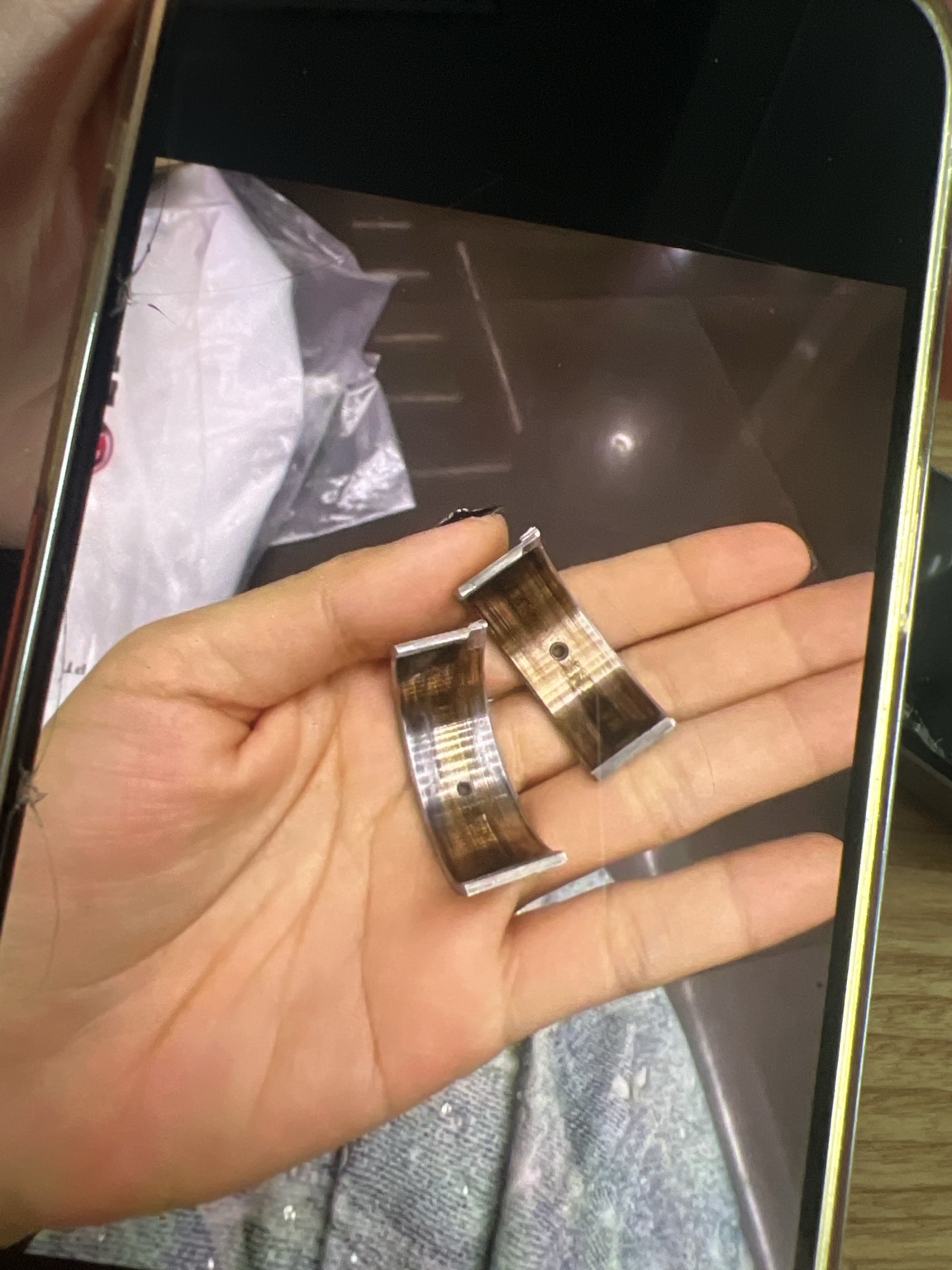
| Wear Pattern | Uniform, even wear | Abnormal, localized | Test faster |
| Working Surface | No visible damage | Copper substrate exposed | Abnormal stage |
| Oil Hole | None (splash lubrication) | Present (pressure lubrication) | Different regime |
| Overall Stability | Stable | Unstable | Failed to meet expectations |
Visual Comparison: Wear Patterns
3. Root Cause Analysis
JA-Modified's investigation identified the root cause by systematically comparing the prototype and production designs. The key finding was a change in the lubrication regime caused by the addition of an oil hole.
3.1 The Core Problem: Oil Film Instability
The primary failure mode is oil film instability. In a properly functioning bearing system, a stable oil film separates the rotating shaft from the bearing surface. When this film breaks down, metal-to-metal contact occurs, accelerating wear exponentially.
The Test Design (with oil hole) experienced oil film failure at approximately 1/20th the service life of the Standard Design (without oil hole).
3.2 Key Engineering Factors
JA-Modified identified multiple engineering factors that contributed to the premature failure. Each factor was evaluated against the prototype's successful performance baseline.
Factor 1: Oil Hole Changes the Lubrication Regime
The addition of an oil hole fundamentally changes how the bearing is lubricated:
| Parameter | Without Oil Hole (Prototype) | With Oil Hole (Production) |
|---|---|---|
| Lubrication Type | Splash lubrication | Pressure lubrication |
| Oil Flow | Oil accumulates naturally | Oil is forcibly directed |
| Flow Rate | Lower | Higher |
| Film Formation | Stable film formed gradually | Depends on hole geometry |
The two designs operate under different lubrication physics. Direct comparison of wear results is invalid.
Factor 2: Oil Hole Size & Flow Rate
If the oil hole diameter is too large, it acts as a pressure relief point:
- Oversized oil hole Excessive oil leakage System oil pressure drop
- Reduced oil film load capacity Accelerated wear
Factor 3: Oil Hole Edge Condition
Drilling creates micro-burrs at the hole edge:
- Burrs at hole edge Scratches shaft surface Metal debris in oil
- Contaminated oil Blocked oilways Further wear
Factor 4: Stress Concentration
An oil hole creates a local stress riser in an already high-stress environment, potentially initiating fatigue cracking.
3.3 Secondary Contributing Factors
| Factor | Impact | Status |
|---|---|---|
| Assembly clearance | Affects oil film thickness | Needs verification |
| Crankshaft journal condition | Surface finish affects film formation | Needs verification |
| Oil viscosity & temperature | High temp thins the film | Needs verification |
| Engine oil pressure | Low pressure = thin film | Needs verification |
| Bearing shell seating | Poor contact = poor heat dissipation | Needs verification |
| Usage conditions | High RPM / load / break-in procedure | Needs verification |
4. Critical Lesson: Prototype vs. Production Consistency
JA-Modified's analysis revealed a fundamental lesson that applies to all performance engine component development: prototype and production specifications must match exactly.
The most important finding from this case:
The prototype (20,000 km) and production (1,000 km) components were not the same design.
Prototype: No oil hole Splash lubrication 20,000 km
Production: Oil hole added Pressure lubrication 1,000 km
The two cannot be directly compared.
Engineering Takeaways
| # | Lesson | Application |
|---|---|---|
| 1 | Match test conditions to production | If production includes an oil hole, the prototype must too |
| 2 | Verify any design change independently | An oil hole is not "minor" it affects lubrication physics |
| 3 | Document all differences | Every deviation between prototype and production must be recorded |
| 4 | Validate oil hole parameters | Size, position, edge finish, and flow rate all matter |
5. Technical Recommendations for Engineers
Based on this analysis, JA-Modified recommends the following protocols for any part transitioning from prototype to production. These are now part of JA-Modified's standard supplier evaluation process.
- NEVER assume a design change is "minor" an oil hole changes the lubrication regime entirely
- ALWAYS match prototype specs to production specs if production has it, so should the prototype
- VERIFY oil hole parameters independently hole diameter, position, deburring, flow rate
- MONITOR these during validation oil pressure, temperature, clearance, journal condition
- ESTABLISH a design change protocol any change = re-validation required
Recommended Validation Process
| Step 1 | Step 2 | Step 3 | Step 4 |
|---|---|---|---|
| Desktop Analysis | Bench Test | Dyno Test | Field Test |
| CFD / Stress Analysis | Oil Flow Verification | Full Load Durability | Real-World Conditions |
6. Conclusion
The premature bearing wear in this case was not caused by material quality or manufacturing defect. The root cause was an oil film stability issue introduced by adding an oil hole to the production design a feature that was not present in the successfully tested prototype.
Industry key takeaway:
A design change between prototype and production no matter how small invalidates direct comparison of test results. Each variant must be validated independently.
This case reinforces:
- Prototype-production consistency test what you will produce
- Independent verification each design variant needs its own validation
- System-level thinking a single hole affects the entire lubrication system
Download Full Report
Download the complete case study as a professional PDF document, formatted for engineers and engine builders.