
When customers evaluate a crankshaft and connecting rod assembly, the first question is often about material: 4340, 300M, titanium, carburizing, nitriding, or coating. Material matters, but it is only one part of reliability.
For performance motorcycle engines, the more practical question is: what precision checks have been verified for this exact application? A crankshaft or rod set should not be judged by material name alone. Geometry, fit, clearance definition, balancing data and inspection records all matter.
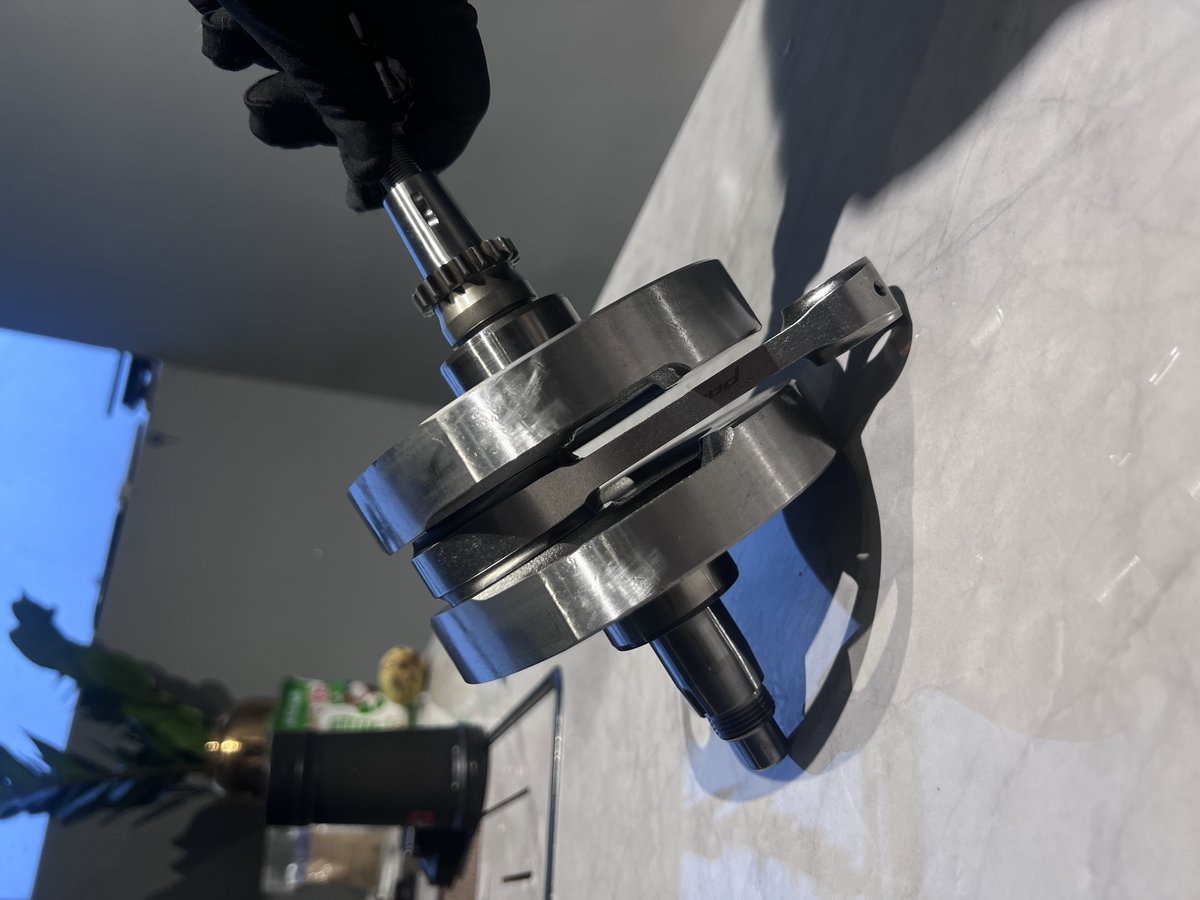
This article is a practical checklist, not a universal tolerance chart. Clearance and tolerance values must be confirmed from the actual drawing, crank pin size, bearing type, piston weight, RPM range, lubrication system and inspection report.
1. Crankshaft Runout / Coaxiality
The crankshaft journals and bearing locations must rotate around the intended axis. If the crankshaft has excessive runout or poor coaxiality, the engine may show vibration, uneven bearing loading and abnormal wear, especially at higher RPM.
For builders and importers, the useful request is not simply “make it precise.” The useful request is:
- actual runout or TIR measurement;
- where and how it was measured;
- whether the value is before or after final assembly;
- whether the result matches the drawing or the engine builder’s requirement.
It is safe to say that crankshaft runout and coaxiality should be checked and recorded. It is not safe to publish one single micron value as a universal standard for every crankshaft design.
2. Wrist Pin to Small-End Bore Fit
The wrist pin connects the piston to the connecting rod. The fit between the pin and the small-end bore must allow controlled motion, lubrication and thermal expansion. Too tight may cause heat, scuffing or seizure. Too loose may create noise, impact loading and accelerated wear.
The required fit depends on the pin diameter, pin material, coating, small-end material, bushing design, lubrication and intended use. This is why JA-Modified recommends confirming the fit as an application-specific value, not as a single fixed number for all engines.
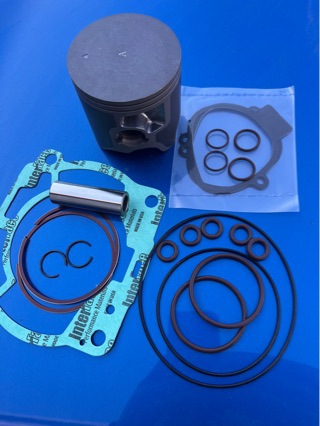
DLC is a hard, low-friction coating family, but coating alone does not guarantee reliability. When a DLC-coated pin is used, the matching small-end bore, bushing or surface treatment should be confirmed together with lubrication and clearance. JA-Modified does not recommend judging the pin alone without checking the counterface.
3. Big-End Clearance: First Define the Measurement
This is the point most easily misunderstood. “Big-end clearance” can mean different things depending on the engine structure.
| Term | Typical meaning | Why it matters |
|---|---|---|
| Bearing oil clearance | Clearance between the crank journal and plain bearing after assembly | Controls oil film, temperature and bearing load |
| Needle bearing fit | Fit between crank pin, needle bearing and rod big end in some motorcycle / two-stroke assemblies | Controls rolling contact and lubrication conditions |
| Connecting rod side clearance | Axial clearance between rod side faces and crank cheeks or thrust faces | Affects oil escape, side movement and assembly freedom |
These are not the same measurement. A number suitable for one structure may be completely wrong for another structure.
Major bearing suppliers also describe bearing oil clearance as application-dependent. For example, MAHLE/Clevite publishes fitting guidance for engine bearings, and King Engine Bearings explains that bearing clearance should be matched to engine design, load, oil viscosity, temperature and usage. In other words, clearance is not decided by a single universal number.
Before discussing “big-end clearance,” first confirm the bearing structure. Is it a plain bearing, needle bearing, or another crank assembly design? Then confirm the target value from the drawing, manufacturer data, engine builder requirement or inspection report.
4. Dynamic Balancing Requires Real Mass Data
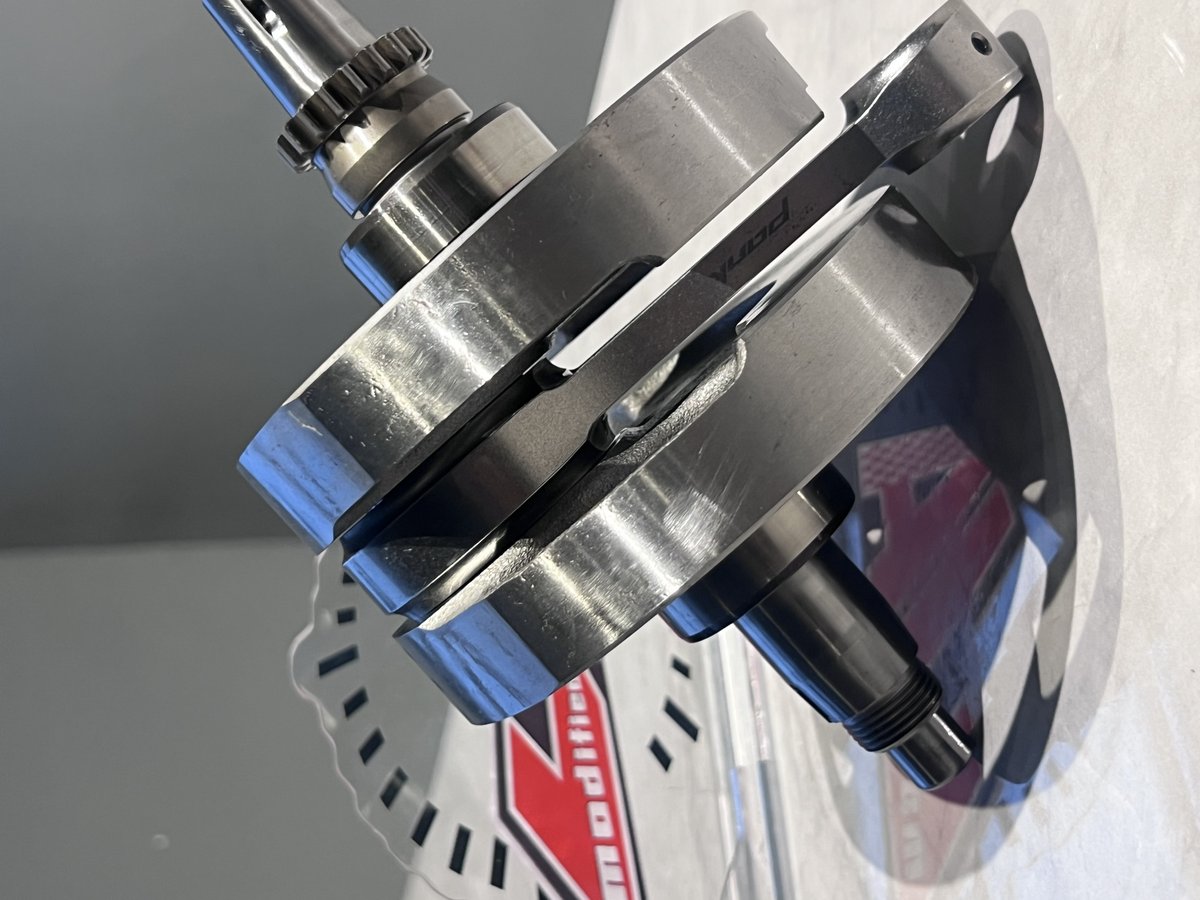
Crankshaft balancing is not only about spinning the crankshaft by itself. The rotating and reciprocating system includes the crankshaft, connecting rod big-end and small-end mass, piston, wrist pin, piston rings, clips and, where applicable, flywheel or rotor components.
If the piston assembly weight changes, the balance condition may also change. This matters when a customer changes bore size, compression height, pin size, piston alloy, ring package or application target.
What Customers Should Provide Before Development
For a custom crankshaft or connecting rod project, the following information helps avoid wrong assumptions:
| Information | Why we need it |
|---|---|
| Engine use: street, racing, endurance, high RPM | Different use cases need different safety margins and inspection focus |
| Target maximum RPM | Affects balance, load and fatigue discussion |
| Piston assembly weight | Required for balancing discussion |
| Wrist pin diameter and coating | Needed for small-end fit and counterface compatibility |
| Crank pin size and bearing type | Needed before discussing big-end clearance |
| Drawing, sample or inspection report | Prevents turning assumptions into specifications |
Inspection Summary
| Check | Common inspection method | Public-safe wording |
|---|---|---|
| Crankshaft runout / coaxiality | V-blocks + dial indicator, fixture, or CMM depending on part | Should be checked against the drawing or builder requirement |
| Wrist pin to small-end fit | Pin measurement + bore gauge / air gauge / internal micrometer | Must match pin, bore, material, coating and lubrication |
| Big-end clearance | Depends on structure: bearing measurement, bore gauge, side clearance gauge, or matched assembly inspection | Define the type of clearance before discussing the value |
| Dynamic balancing | Balancing machine with real component weights | Requires piston, pin, rings, clips and rod mass data |
Technical Reference Basis
- MAHLE / Clevite engine bearing fitting guidance: engine bearing fitting tips.
- King Engine Bearings technical FAQ: bearing clearance depends on application conditions.
- ZRP connecting rod installation instructions: separate wrist pin clearance, bearing clearance and side clearance.
- Pauter technical FAQ: rod side clearance depends on rod/crank guidance design.
- JA-Modified internal engineering review: supplier discussions, sample inspection requirements and application matching experience. Internal project names, customer names, supplier names, pricing and order data are not included in this public article.
Conclusion
A reliable crankshaft and connecting rod assembly is not defined by material alone. It is defined by the complete system: material, heat treatment, machining precision, inspection, bearing structure, lubrication, balancing data and the actual engine application.
That is why JA-Modified prefers to discuss crankshaft and rod quality with drawings, measured data and application conditions — not material names alone.
Send us the engine application, target RPM, piston assembly weight, wrist pin size, crank pin size and sample or drawing. We will help review which precision checks should be confirmed before production.
© 2026 JA-Modified Racing Performance. Technical information is for reference only. Final clearance and tolerance requirements must be confirmed according to the specific engine, drawing, manufacturer data and engine builder requirement.