In custom piston projects, one question comes up often: if the finished piston has top interference, can we just machine a little more material away?
The answer is not simply yes or no.
A piston is not a solid aluminum block. Under the crown, there may be an internal cavity, reinforcement ribs, oil-cooling features, or weight-reduction structures. Near the top, there is also the first ring groove. The piston crown shape affects compression ratio, combustion chamber behavior, valve clearance, and thermal load.
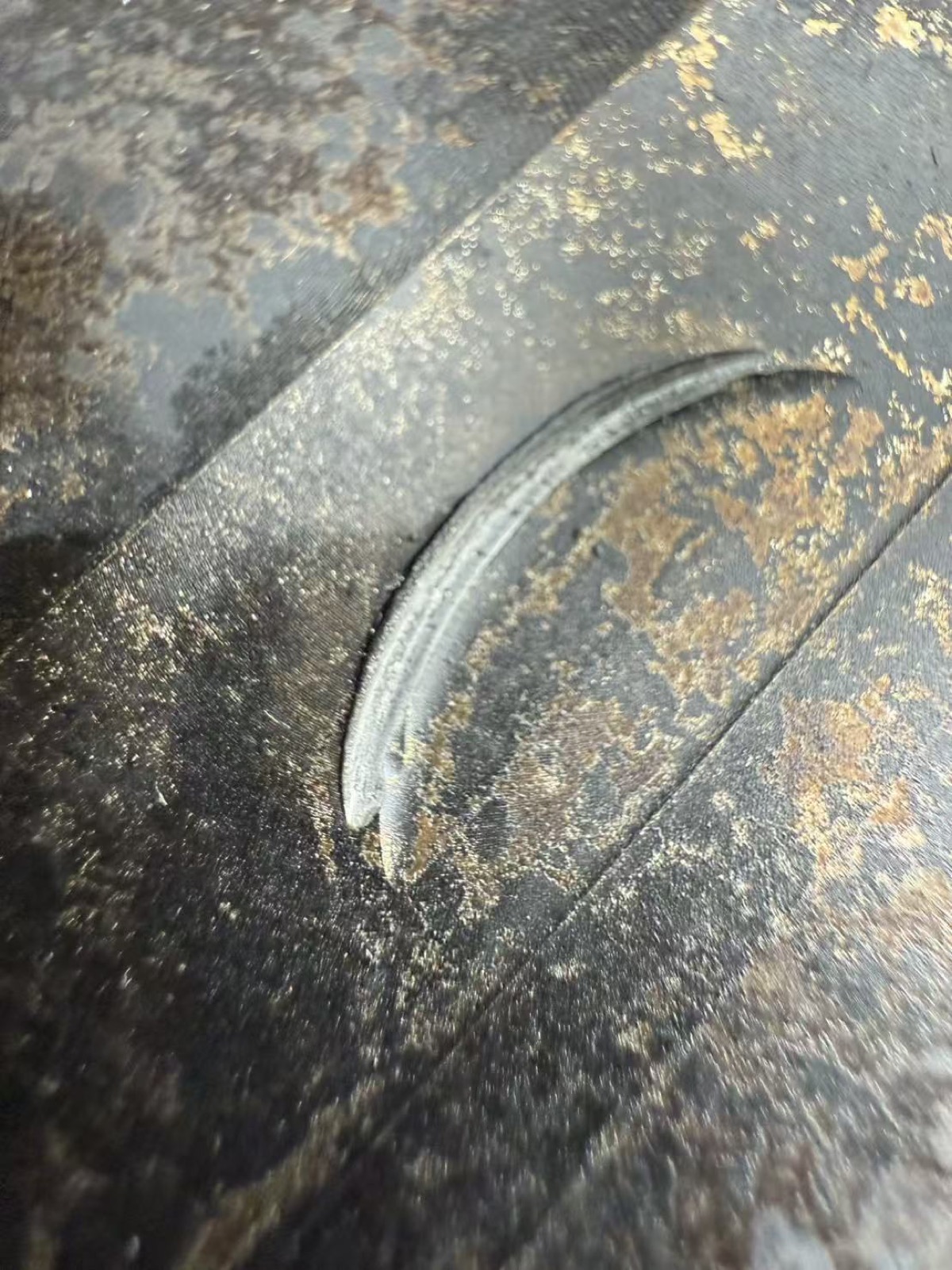
Example of a piston crown contact / rework area. This image is used only to explain the checking process; it does not identify any customer, engine model, or responsibility.
Three safety areas before cutting
Why does top interference happen?
- The piston crown is raised to increase compression ratio.
- Compression height, gasket thickness, and cylinder head machining are not checked together.
- The combustion chamber shape is not fully measured.
- Valve lift, valve angle, timing, or camshaft specifications have changed.
- The customer engine is no longer in OEM condition.
- There was not enough clearance margin during development.
The most dangerous part of a custom piston project is not the desire to increase compression ratio. It is trying to increase compression ratio without knowing how much space is actually left inside the engine.
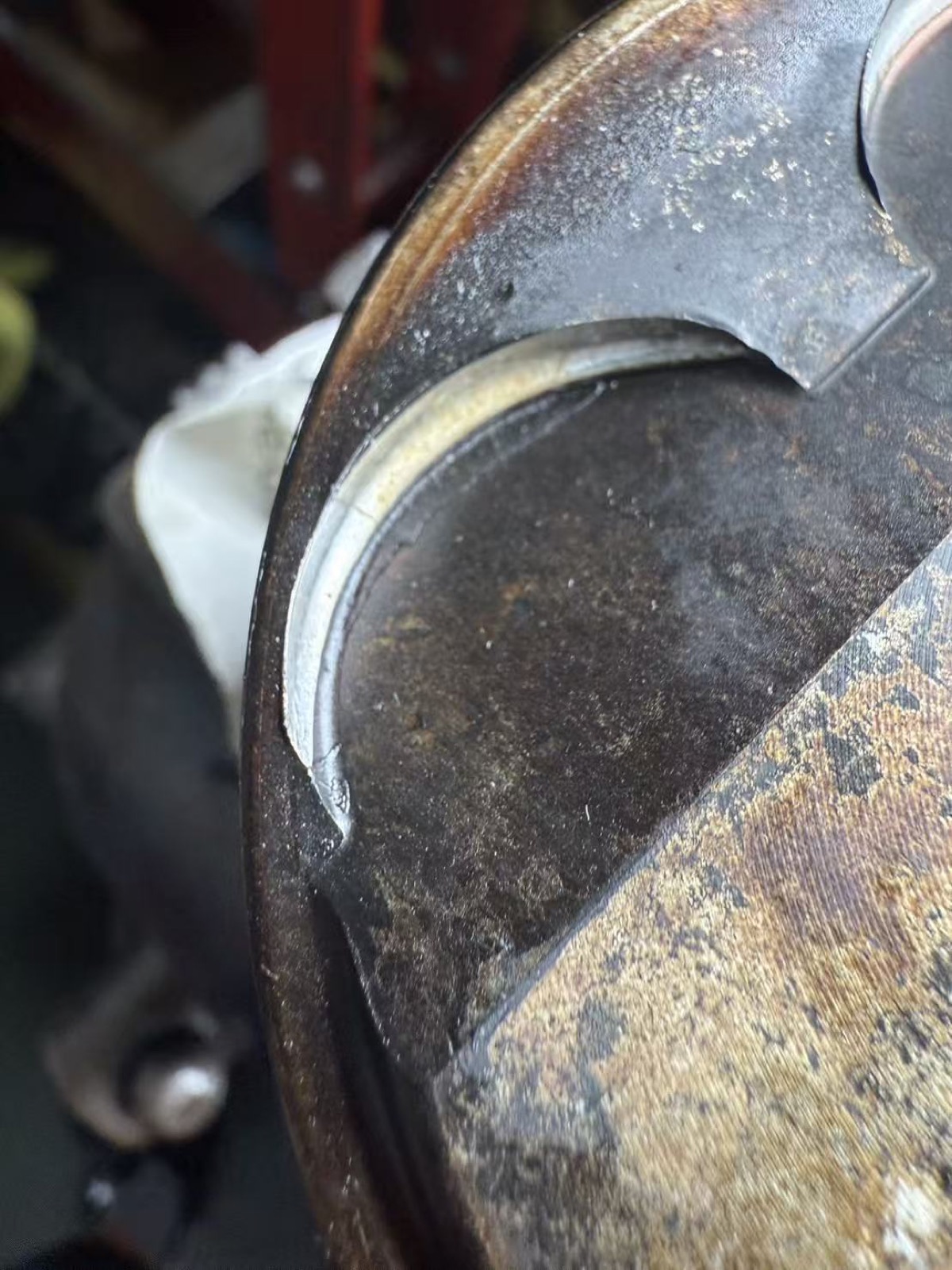
A second example angle showing why the interference area, machining width and nearby crown geometry must be confirmed before cutting.
What must be checked before re-machining?
1. Where exactly is the interference?
Is the piston crown touching the cylinder head? Is the valve touching the pocket? Is the spark plug, injector, or chamber edge involved? Different interference points require completely different solutions.
2. How much material must be removed?
“Machine a little” is not enough information. The machining depth, area, diameter, and target clearance must be clear.
3. Is the remaining crown thickness safe?
If too much material is removed, the crown may lose strength and thermal capacity. The risk can include deformation, local burning, fatigue cracking, or failure under heat and cylinder pressure.
4. Is there enough distance to the first ring groove?
Machining too close to the first ring groove can weaken the first ring land. This may lead to groove deformation, blow-by, oil consumption, or cracking.
5. Will compression ratio and valve clearance change?
Removing crown material changes combustion volume. It may affect compression ratio, squish area, knock tendency, valve-to-piston clearance, and combustion behavior.
When can re-machining be considered?
- The interference location is clearly identified.
- The machining depth and area are defined.
- The remaining crown thickness is acceptable.
- The distance to the first ring groove is acceptable.
- Valve, cylinder head, spark plug or injector clearance is re-checked.
- The final compression ratio remains within the target range.
- The finished piston can be safely clamped without damaging the skirt, ring groove, pin bore, or coating.
- The dimensions and consistency can be re-measured after machining.
JA-Modified recommendation
If a finished piston has interference, do not rush to cut it. First confirm where it touches, how much material must be removed, whether the crown and ring land still have enough safety margin, and whether the final compression ratio and valve clearance remain acceptable.
Custom piston design is not just about copying a shape. It is about balancing compression ratio, strength, clearance, and reliability inside a very limited space.