
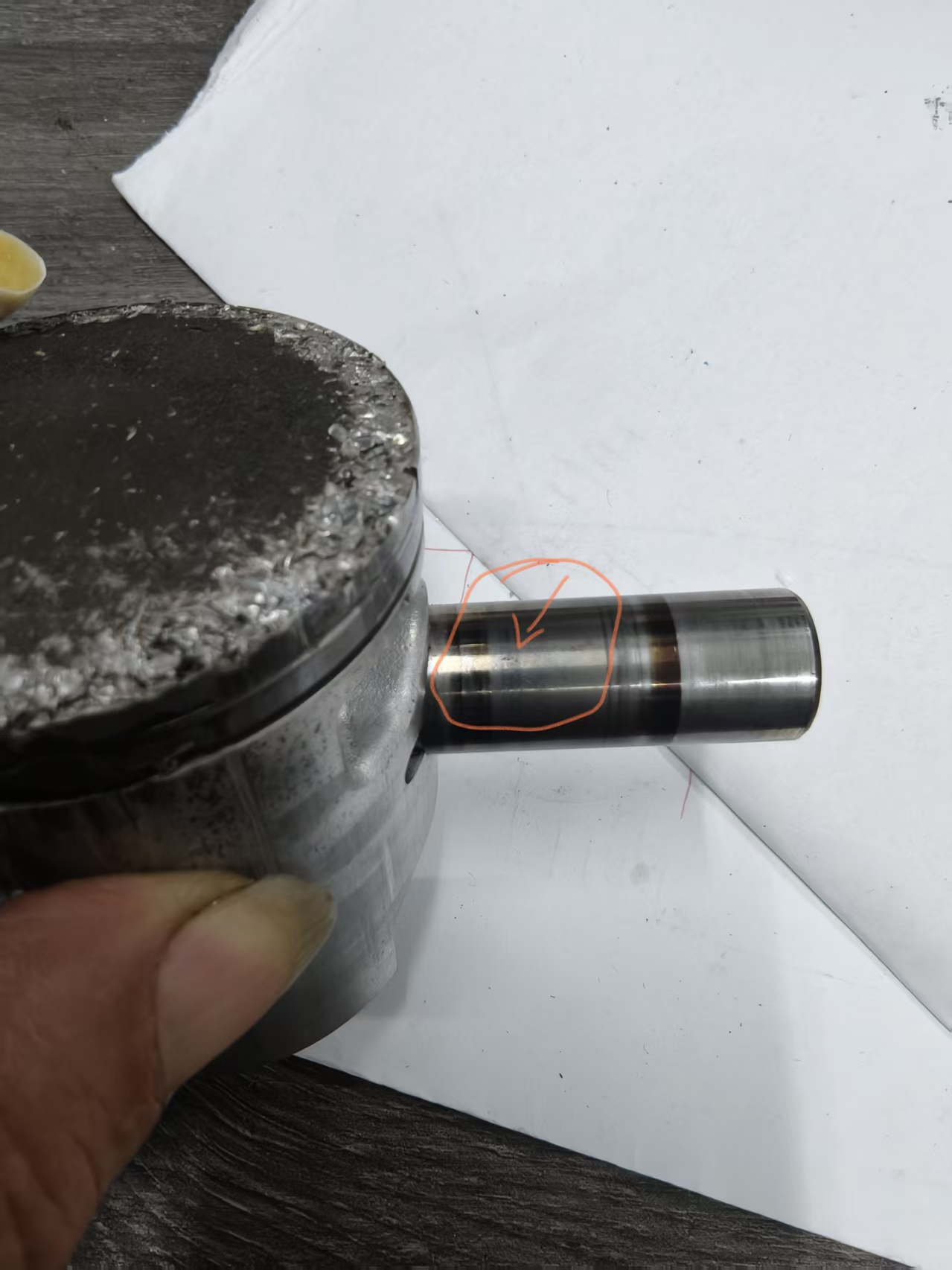
“Sand eye” is not a failure diagnosis
A small pit or hole on a piston pin is often called a “sand eye” in the field. From a failure-analysis perspective, it may be a pore, inclusion, fold, crack, grinding mark, corrosion spot or cleaning residue.
The correct first question is not “Was this pin made from tube?” It is: What is the defect, and did it originate in the material, forming, heat treatment or subsequent machining?
What cold extrusion does well
Cold extrusion forms a solid steel blank by plastic flow, bringing it closer to the final hollow profile. With a suitable design, it reduces machining removal and supports a more continuous grain-flow pattern along the part profile.
Cold deformation may also contribute to work hardening and dimensional consistency. These advantages matter for piston pins that carry repeated loads.
Cold extrusion is not a defect-repair process. Some pores may close or shrink during plastic deformation, but inclusions, serious cracks, segregation, folds and surface cracks still require material control, die design, lubrication, annealing and inspection.
What matters in tube machining
Tube machining uses seamless steel tube as the starting material, followed by cutting, turning, heat treatment and finishing. Reliability depends on metallurgical cleanliness, wall thickness, concentricity, machining allowance, heat treatment and final inspection.
Near-surface defects may be removed or exposed during machining. Internal defects require material records and suitable non-destructive testing. Therefore, tube machining cannot be judged by the process name alone.
How to investigate a suspected defect
- Keep the defect part and a same-batch comparison part. Do not polish or discard it first.
- Record the location, size, quantity and the process in which the mark appeared.
- Use sectioning, metallography and suitable non-destructive testing to identify the defect type.
- Trace the steel heat, forming batch, heat-treatment batch and final inspection records.
How should the process route be selected?
For high-volume piston pins requiring efficient material use and consistent dimensions, cold extrusion is often advantageous. Tube-machined pins can also meet a design requirement when their material, heat treatment and inspection evidence are clear.
Do not judge reliability by one process name. Check the complete loop: material stability, process fit, heat-treatment control and inspection evidence.
FAQ
References
US4210468A · CN101386035A · CN106763754A · Forging Industry Association, Product Design Guide for Forging · Lin et al., “Piercing and Surface-Crack Defects in Cold Combined Forward-Backward Extrusion”